




Key Takeaways
- Poor footwork and incorrect contact are usually responsible for weak overheads, according to The Padel School, which stressed that “the majority of players really struggle with two main areas,”
- Using training aids alongside repeated shadow drills allows movements to become instinctive, ensuring “these footwork patterns are going to become muscle memory” and removing hesitation during play.
- Targeted practice away from the court is crucial for mastering the technique, coaches cautioned, because “you can’t practice this in a match because you never get the ball in the right place,”
Developing movement patterns off the court
Before contact is even made with the ball, two fundamental issues generally cause overhead technique to break down, according to The Padel School. Addressing them is a major hurdle for developing padel players trying to combine crisp striking with effective recovery.
“The majority of players really struggle with two main areas,” explained the coaching platform. “One is the footwork to give themsel a good position by the ball and the next is the contact, getting that in the right place and having the right brush on that ball.”
The solution to these recurring problems begins away from live court practice. Repeating shadow footwork makes reactions instinctive and reduces hesitation in matches. Sharp positioning underpins the opening sequence: “We want to pivot with this outside step, cross over step, come back and play our shot.” With enough off-court repetition, “these footwork patterns are going to become muscle memory,” enabling players to perform under pressure without thinking through every movement.
Improving bandeja slice and arm height
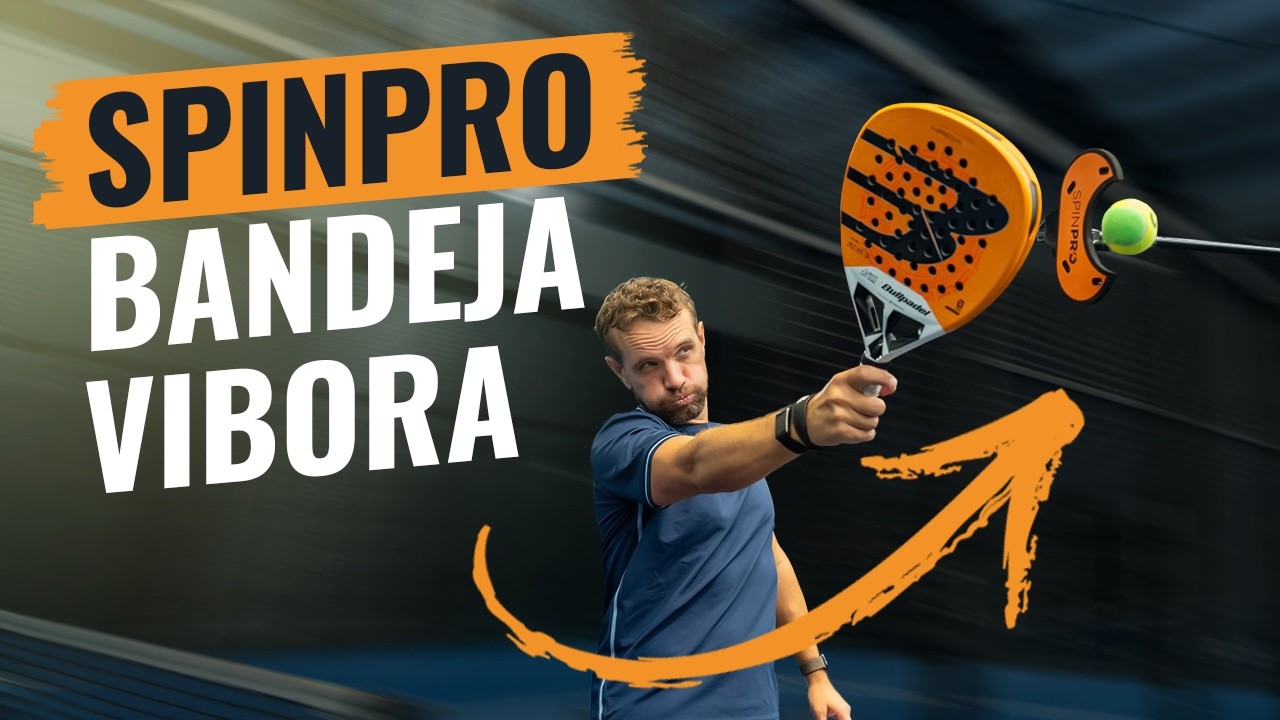
After the footwork has become dependable, attention can turn to spin and the quality of contact. To reinforce the ideal contact point, The Padel School recommended placing the SpinPro training aid around forehead level and angling it slightly to encourage slice.
A correct swing path is essential, coaches said, while warning that lowering the elbow can produce unwanted topspin: “We want the arm up and we’re going to brush down through that ball so we can have the slice on the contact.” Combining shadow volleys with an explosive retreat teaches players to strike in front of the body instead of allowing the overhead contact point to move behind them.
“So much of this is players not getting back far enough, and therefore the contact is behind them,” the instruction explained. Repeatedly performing “going back quickly playing the band deca and recovering fast” mirrors the physical tempo players need in competitive exchanges.
Finding relaxation and side spin on the vibora
Moving from the bandeja to the vibora requires changes to both body movement and the angle of contact. Players can practise the path used to wrap around the outside of the ball by positioning the training unit slightly lower and turning it horizontally.
To make the ball stay low after rebounding from the back glass, producing substantial side spin is vital, the coaching analysis explained: “Part of this is just going from this position and throwing the racket and staying relaxed with the arm.” The recommended motion starts with the racket head near the back of the neck before it accelerates forward through contact.
Trying to correct these movements exclusively in competitive situations can instead hinder progress. “You can’t practice this in a match because you never get the ball in the right place,” highlighted the session. “You never get repetition that you need to build the technique properly.” Structured drills away from the court allow players to ingrain the bandeja’s slice and the vibora’s bite before applying them over the net.