




Key Takeaways
- Across 2025, almost 5,000 padel clubs launched worldwide—an average of about 14 new venues each day.
- About three padel courts can occupy the same footprint as one tennis court, underpinning attractive venue economics and an equipment market worth €600 million.
- After almost 90 bankruptcies were recorded in Sweden in 2023, the market highlighted the serious financial danger of expanding capacity beyond sustainable levels.
New markets fuel rapid expansion of padel’s global presence
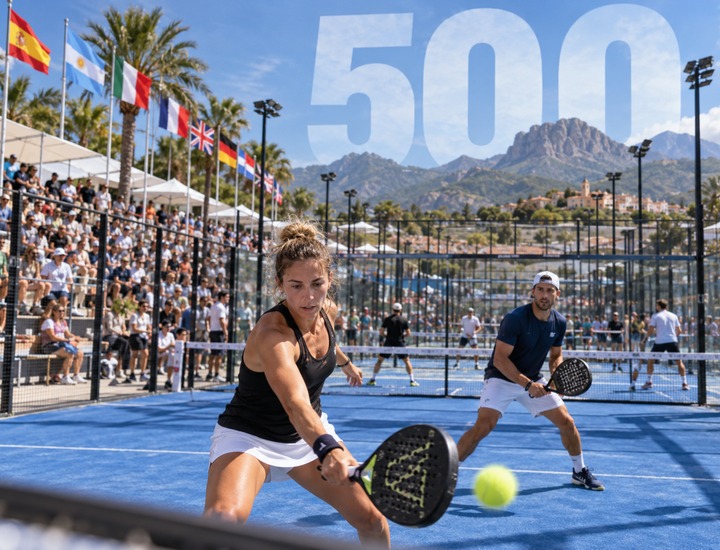
Almost 5,000 padel clubs opened worldwide in 2025, translating to approximately 14 venue launches per day and showing that the sport’s global expansion is barely slowing. Padel originated in Mexico in 1969 and has longstanding ties to Spain and Argentina, but improved accessibility and modern technology have since helped turn it into a worldwide leisure activity.
Industry studies produce different estimates of padel’s global reach because they use varying methodologies. Playtomic and a PwC subsidiary put the total at about 19 million active players and more than 58,000 courts, whereas International Padel Federation data lists over 35 million participants, 77,000 courts, and a presence in 150 countries. Lawn Tennis Association figures indicate especially sharp growth in Great Britain, where participation rose from 15,000 players in 2019 to 860,000 in 2025.
Accessible gameplay helps turn beginners into regular players
Compared with traditional racket sports, padel offers distinctive accessibility that has helped accelerate its adoption. The analysis explains that “Think about your first proper round of golf, or your first game of tennis. You probably spent a lot of time chasing balls, getting frustrated, and apologizing to the people you are playing with. Padel is way more forgiving,” Because “the serve is underarm, the court is smaller, the walls keep the ball in play,” players from any background can begin producing successful rallies quickly.
Playing every match as doubles adds further impetus to that growth. Operators see communities develop naturally because “most players are learning with friends, colleagues, or family, so it feels like a social event just as much as a sporting one,” Players are “The club’s customers end up doing quite a bit of its marketing for it,” while also setting up WhatsApp groups and scheduling regular fixtures. Matchmaking platforms make coordination even easier: Playtomic, for example, has more than 4.7 million users and 6,500 partner venues, helping players “no longer need to find three available friends every single time you want to play.”
Favorable court economics draw private capital
Padel’s compact court size gives commercial property owners a potentially appealing business model in addition to its grassroots popularity. A court measures 20 meters by 10 meters, and once run-off areas are considered, the space required for one conventional tennis court can accommodate roughly three padel courts. A £60 hourly booking shared by four players costs each person £15, keeping the game accessible to casual customers while producing significant revenue.
At 35 percent utilization, a six-court indoor facility operating 14 hours daily can collect about £644,000 in annual court fees; at 50 percent, that figure increases to roughly £920,000. Greater occupancy offers considerable financial upside because core costs—including rent, court construction, and management software—remain mostly fixed. Additional income is also being generated through coaching, racket rental, retail, cafes, workspaces, gyms, and saunas.
Padel’s wider commercial sector has expanded alongside participation. Since 2019, the global equipment market has grown by an average of 34 percent per year, reaching an estimated value of almost €600 million in 2025. Institutional investment has also become prominent: Playtomic secured €65 million in 2025, while Qatar Sports Investments brought the professional circuit together through its 2023 acquisition of the World Padel Tour.
Sweden illustrates the dangers of excessive expansion
Commercial risk remains significant despite the industry’s prominent success stories. Findings in the 2026 Playtomic report indicate that the strongest venues earn as much as five times the revenue per court of lower-performing rivals. As the assessment points out, “Strong growth across the sport doesn’t mean that every club is a good investment,”
The clearest example of an overheated padel market comes from Sweden, where court numbers surged from 300 to 3,500 before supply rapidly exceeded sustainable demand. Higher borrowing costs intensified the pressure, contributing to almost 90 padel-related company bankruptcies in 2023; one major operator also shut around 50 venues. The review observes that “People hadn’t suddenly lost interest in padel. There were just too many businesses built around peak demand, cheap finance, and the belief that the growth would continue at the same rate,”
Disciplined management, rather than enthusiasm alone, will play a growing role in determining whether venues remain viable as developing markets mature. Alongside handling groundworks, ventilation, acoustics, and expensive property leases, operators need to improve utilization during quieter daytime periods. The analysis concludes that “The padel boom is real. We’re now starting to find out which businesses were built to last,”