




Key Takeaways
- Leg drive, balance, and explosive strength directly influence padel strokes such as the serve, bandeja, and smash.
- Integrated sessions connect fitness exercises with on-court actions, pairing speed drills with volleys and strength work with smashes.
- To limit physical overload, a planned five-day schedule distributes work across stroke technique, mobility, strength, speed, and match play.
Creating the physical base for on-court technique
Technical command of the volley, bandeja, and smash may not be enough in competitive padel if a player’s body cannot maintain the required effort. Lasting at a high level for a full match means combining technical execution with physical preparation to improve endurance, speed, power, and accurate control of the court.
Successful padel technique is closely linked to physical conditioning. Leg power supports a firm serve, while coordination and stability are needed for an effective bandeja. Quick reactions help players defend difficult positions, and a forceful spike requires strength and explosiveness. Players therefore need to develop their bodies alongside refining their technique.
Developing stamina, strength, and agility
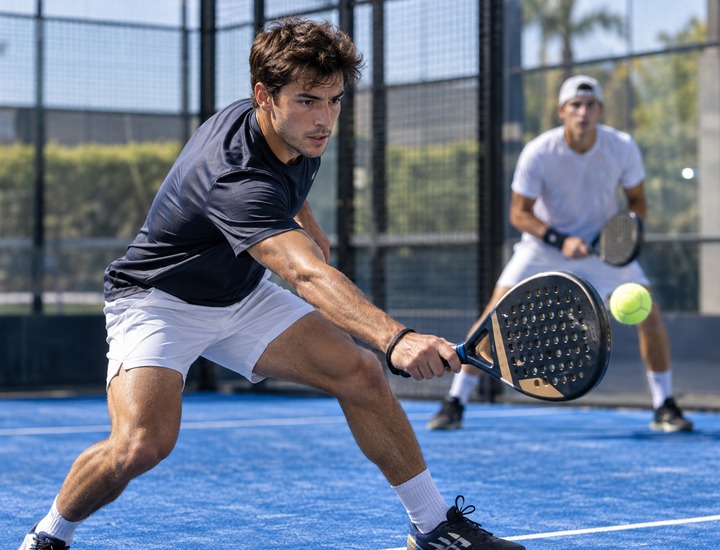
Footwork and movement exercises are vital because padel is built around brief, explosive actions. Regular sessions should incorporate lateral mobility, changes of direction, short sprints, and coordination ladder drills. Reaching the ball sooner gives a player extra fractions of a second to evaluate the situation and produce a clean stroke.
The value of strength work extends beyond adding power, as it provides the foundation for maintaining body control under pressure. Squats, lunges, resistance band exercises, core stability drills, and explosive throws are among the recommended activities. Improving these qualities helps preserve sound technique during the most demanding rallies.
As matches wear on, fatigue is a major reason technical consistency begins to decline. Cardiovascular work, high-intensity intervals, and planned recovery between demanding bursts should therefore form part of training designed to reduce late-match mistakes. The ability to retain proper technique while fatigued frequently separates elite players from average competitors.
Building conditioning into the weekly schedule
Conditioning is most effective when connected to realistic padel scenarios instead of being trained separately. Players can combine movement with shotmaking, speed exercises with volleys, reaction drills with defensive actions, and strength work with smashes. This approach prepares the body for the conditions encountered on court.
Spreading these components properly across the week supports steady improvement in every area of the game without creating excessive physical strain.
| Day | Training focus |
|---|---|
| Day 1 | Striking technique and mobility |
| Day 2 | Strength and power |
| Day 3 | Match or tactical training |
| Day 4 | Speed and movement |
| Day 5 | Technique and game situations |
On the 20×10 court, genuine improvement comes from bringing together physical fitness, precise technique, tactical choices, and mental resilience.