




Key Takeaways
- Stefanos Tsitsipas rallied from a set down to defeat Jiri Lehecka 2-6, 6-1, 7-6(3), 6-1 in the US Open third round.
- The Greek star revealed that adopting an ancient philosophy of “preparing for the worst-case scenario” and playing pain-free has eased pressure.
- Tsitsipas explained his equipment choice, noting he returned to a familiar racket setup because his “game is more linear” and requires control.
Turning the tide against Jiri Lehecka in New York
Stefanos Tsitsipas navigated a tricky start at the US Open to defeat Jiri Lehecka 2-6, 6-1, 7-6(3), 6-1 in the third round. The Greek player struggled to establish any footing during the opening set before adjusting his strategy and taking control of the contest.
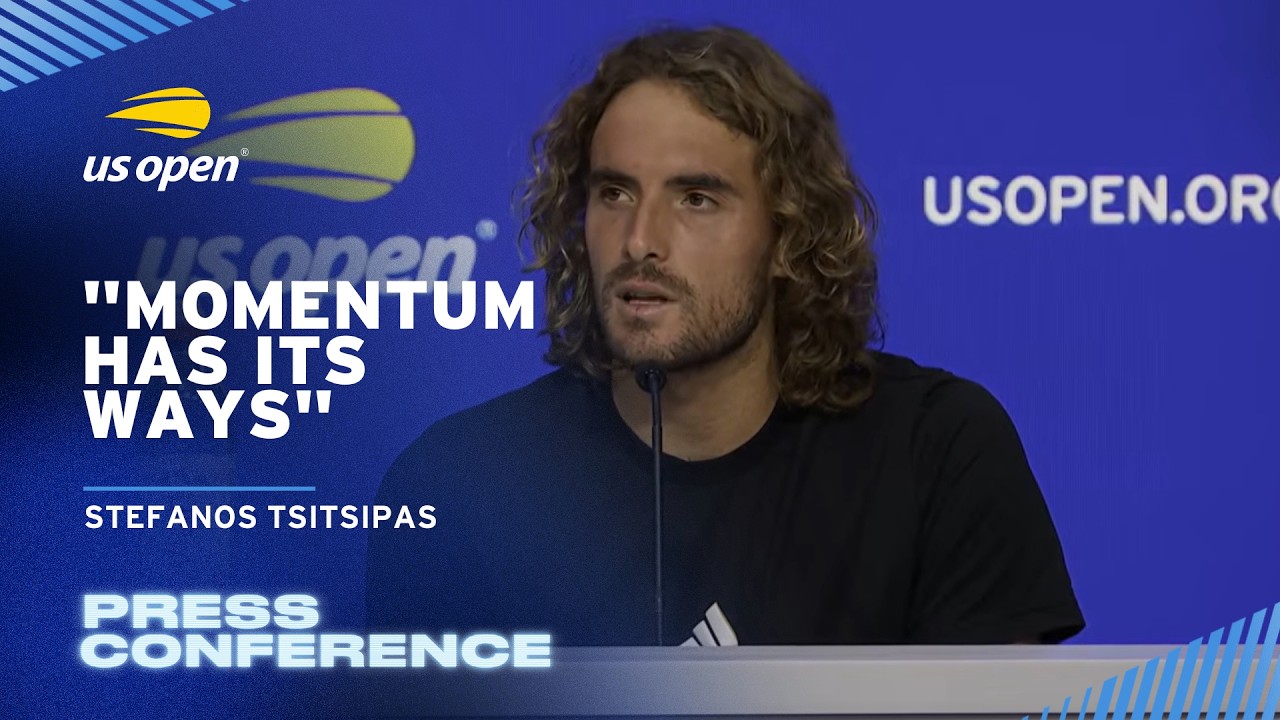
Reflecting on the sluggish beginning, Tsitsipas acknowledged how far behind he felt early on. “Not the best of starts to a match this crucial,” he said. “I was not very pleased with the way the match started and how far back I found myself early in the match. But, I really had to like accept it because, you know, a match can always evolute, a match can always kind of change and shift. The momentum has its ways.”
Tsitsipas pointed out that Lehecka came out firing and offered very little rhythm from the baseline. “Eventually, I felt like a few changes and tweaks that I made to my game seemed to allow me to prevail a little bit more and stay in the set,” Tsitsipas explained. “It wasn’t so much about starting to win, it was more about staying in the set and not dropping my serve. So, once I figured that out, you know, it was a battle of who’s going to break first and I did an exceptional job in the second and in the fourth set.”
Greek philosophy and easing the pressure
Entering the tournament without substantial momentum and holding a lower ranking than in previous seasons, Tsitsipas admitted he is playing with reduced expectations. He explained that operating without the heavy weight of being a top seed has changed his court perspective.
“There isn’t much for me to be worried about, I feel like, cuz I’m just playing and enjoying. And if things go well, things go well,” he said, detailing how he leans into ancient principles. “Trying to accept also this ancient Greek philosophy of like preparing for the worst-case scenario in my mind before I go out into the battlefield, before I go out into this war zone, let’s just call it. I’ve already kind of embraced that, you know, there might be really bad scenarios.”
Tsitsipas added that an abundance of confidence had previously hindered him: “Before, I’d say too much optimism can also and too much confidence can also kill your game, so I’ve learned it in different ways throughout my career.”
Leaving injury worries behind
A persistent back injury disrupted much of Tsitsipas’s previous campaign, preventing him from building rhythm. He revealed how the lingering physical distress affected his daily routine and love for the sport.
“I stopped enjoying practice cuz, you know, my body hurts and going into a match your first concern is am I going to finish a match that’s the number one thing where before it wasn’t even a question,” Tsitsipas said. “This season might have not been the best that I’ve had but at least I wake up every single day and I’m happy that I don’t have any pain and I know I can go practice without any uncertainty of how my body is going to respond.”
When asked about stepping up to make his own decisions following recent coaching changes, Tsitsipas embraced the transition. “In Greece we have a saying it’s better late than never. So I go by that,” he stated.
Sizing up round four and finding comfort in equipment
Looking ahead to his fourth-round matchup against either Ben Shelton or Denis Shapovalov, Tsitsipas noted that both opponents are left-handed, but bring distinct qualities. Regarding Shelton, whom he faced earlier in the American’s career, Tsitsipas observed major growth.
“He’s improved a lot since last time I played him,” Tsitsipas said. “He’s also become more of a man now. Back then he was still kind of a kid and relatively new to the tour. So, he’s been building confidence. I feel like he’s got some good results, good wins, good Masters 1000 runs, and he’s now well established on the tour.”
Tsitsipas was equally complementary of Shapovalov’s resurgence and classical single-handed backhand. “It’s good that he keeps the one-handed backhand alive cuz there aren’t a lot of players out there that still play the one-handed backhand,” he remarked. “In regards of his game, I really enjoy watching him play. I won’t lie, like he’s got a nice aggressive game when he’s really on.”
Addressing questions about his equipment choices, Tsitsipas cleared up confusion regarding his racket history, explaining that his switch back to an older Wilson Blade setup was about regaining familiar control rather than searching for effortless power.
“My identity is more linear. My game is more linear than that. And I was looking for something that feels like home,” Tsitsipas said. “And what feels like home is version that I’m playing with right now. It’s the one that I grew up playing as a kid and the one I know the best. I’m a player that requires control in my game.”
https://www.youtube.com/watch?v=yz2gqSzuRpM
ATP U.S. Open - Stefanos Tsitsipas's projected path

Tsitsipas at the U.S. Open, ranking, and results in 2026


Currently the world no.53, the Greek owns an overall 30-19 win-loss record in 2026. Tsitsipas is currently playing at the U.S. Open where he bested the world no.11 Arthur Fils 4-6 7-6(3) 6-1 6-4, the world no.139 Lloyd Harris 6-7(1) 6-3 7-6(4) 6-4 and the world no.19 Jiri Lehecka 2-6 6-1 7-6(3) 6-1.
Stefanos has won 1 title in 2026 in Gstaad.
The Greek won 14 titles in his career: 2 on hard courts, 6 on clay courts, 5 on indoor courts and 1 on grass courts. (See the list of his titles)