




Key Takeaways
- Work has begun in Narva-Jõesuu on a €1.2 million racket-sports complex with 4 tennis courts and 2 padel courts. Mainly financed by the European Union, the facility is expected to open next summer.
- According to Narva-Jõesuu tennis club board member Erki Jaanson, the town’s pre-war tennis culture disappeared after years of neglect during the Soviet era: “The same thing happened as in other small towns. It wasn’t a priority sport, nor was it an Olympic sport for a long time, so the Soviet era did its work.”
- Discussing how tennis and padel benefit one another, Jaanson said: “I’m rather glad that a somewhat simpler sport has emerged alongside tennis. It also works the other way — some people reach tennis through padel.”
Bringing racket sports back to the Narva-Jõesuu coast
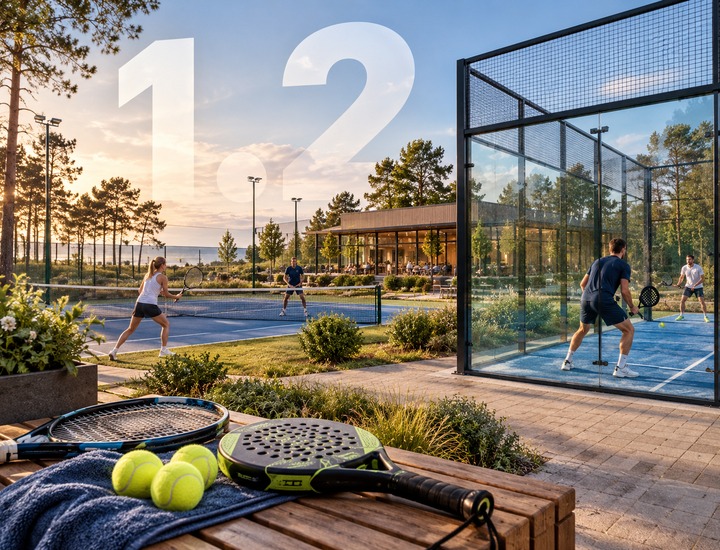
A new seaside racket-sports center is now under construction as Narva-Jõesuu seeks to reclaim its historic standing in Estonia. The €1.2 million venue will include 4 tennis courts and 2 padel courts, with completion planned for next summer. The Narva-Jõesuu tennis club initiated the development, which is being financed largely through European Union support.
Alongside offering up-to-date sports facilities for residents and visitors, the project is intended to revitalize the heart of the resort town. Estonia’s longest tennis tradition began in Narva-Jõesuu 117 years ago, when summer visitors from St. Petersburg founded the country’s first tennis club. The coastal town had 6 courts before World War II, but they gradually disappeared over the following decades.
Side-by-side comparison
| Entry | Value |
|---|---|
| 09 | 35 |
| 09 | 15 |
| 08 | 41 |
Reversing a decline that lasted decades
Racket sports struggled in the resort town throughout the post-war period. Erki Jaanson, who sits on the board of the Narva-Jõesuu tennis club, described how that long decline culminated in the loss of every active court by the close of the 20th century.
“The same thing happened as in other small towns. It wasn’t a priority sport, nor was it an Olympic sport for a long time, so the Soviet era did its work,” said Jaanson.
Narva-Jõesuu is now among the last Estonian resort towns to bring back recreational and competitive racket sports on a large scale. Space around the complex has been reserved for further courts, allowing the venue to expand if demand keeps growing.
Combining tennis and padel to meet rising demand
More than 10 years passed between the project’s original idea and the start of construction, Jaanson said. One reason for the lengthy process was the need to develop at least 4 tennis courts, the minimum required for suitable training camps and officially sanctioned tournaments.
“Everyone I’ve spoken to is eagerly waiting for these courts and promises to come play. One goal is definitely to have a summer base for Kadriorg, where training camps can be held,” said Jaanson, who is also the head of Tallinn’s Kadriorg tennis club.
Estonia’s training venues have encountered major capacity constraints in recent years, Jaanson noted, while padel’s swift growth has helped reduce the strain.
“A few years ago, the situation in Viljandi was such that to hold a training camp there, you had to book the courts three years in advance. Things have improved somewhat now because so many padel courts have been added and the player groups overlap a bit. The situation has normalized,” he added.
Rather than treating the newer discipline as a rival, Jaanson sees tennis and padel as complementary sports.
“I’m rather glad that a somewhat simpler sport has emerged alongside tennis. It also works the other way — some people reach tennis through padel,” said Jaanson.