



Key Takeaways
- Carlos Alcaraz opposed cutting five-set Grand Slam matches in Tokyo, stating: “If we took away the fifth set in Grand Slams, we would end up erasing their historical legacy because I believe their beauty lies precisely in this.”
- Alexander Zverev defended the traditional distance in Beijing, arguing: “It is history. It is part of what we do, it is part of why we prepare physically.”
- Stan Wawrinka supported the best-of-five format at the Australian Open, noting: “I feel like I have more time to put my game on the court, to find solutions.”
Defending the soul of men’s Grand Slam tennis
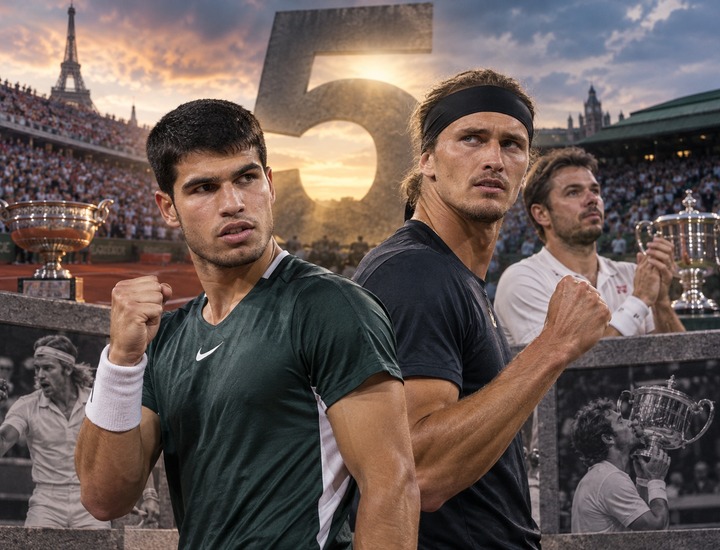
As the tennis calendar expands and player welfare dominates discussions across the tour, debate frequently turns toward whether men’s Grand Slam matches should be shortened. Carlos Alcaraz and Alexander Zverev have firmly pushed back against any proposal to eliminate five-set contests at the sport’s four Majors, insisting the traditional format defines the pinnacle of tennis.
Speaking from Tokyo, Alcaraz made his stance unmistakable. “If we took away the fifth set in Grand Slams, we would end up erasing their historical legacy because I believe their beauty lies precisely in this,” the Spaniard stated. While Alcaraz has been vocal about wanting a less suffocating schedule, he does not believe modernizing the sport requires compromising its biggest stages.
In Beijing, Zverev echoed that view, warning that shortening the format would reduce the prestige of the Majors and turn them into little more than four additional Masters 1000 tournaments. “It is history. It is part of what we do, it is part of why we prepare physically,” the German explained, highlighting that grueling endurance is central to the ultimate prize.
Finding solutions rather than trimming regulations
The push to shorten matches often stems from concerns over player fatigue and the perceived shortening of audience attention spans. However, addressing these challenges does not necessitate cutting down Grand Slam play. The more logical route involves reassessing the mandatory nature of weekly commitments, avoiding matches that finish in the early morning hours, and giving players the freedom to manage their schedules.
The extended best-of-five format also provides a unique tactical arena that shorter matches simply cannot replicate. Stan Wawrinka highlighted this dynamic at the Australian Open when discussing the extra distance: “I feel like I have more time to put my game on the court, to find solutions.”
That strategic depth allows players to absorb rough patches and stage historic comebacks. The 2025 Roland Garros final between Jannik Sinner and Alcaraz offered a compelling example, stretching 5 hours and 29 minutes as Alcaraz recovered from 2 sets down and erased 3 match points in the 4th set to triumph. While not every marathon encounter is an instant classic, the five-set format preserves the rare space where legendary sporting drama can unfold.
ATP Beijing - Alexander Zverev's projected path

Zverev in Beijing, ranking, and results in 2026



Currently the world no.2 (career-high), Alexander owns a compiled 58-14 match record in 2026. Zverev is now having a run in Beijing where he defeated the world no.39 Cameron Norrie 7-6(1) 6-4 and the world no.250 Juncheng Shang 6-0 6-3.
Alexander Zverev will fight against the world no.11 Novak Djokovic in the quarter. Their actual head to head record is 9-5 for Djokovic.
Alexander has won 2 titles in 2026 at the French Open and U.S. Open.
Alexander won 27 titles in his career: 9 on hard courts, 10 on clay courts and 8 on indoor courts. (See the list of his titles)