




Key Takeaways
- The Laver Cup pits 6 players from Team Europe against 6 from Team World in a race to secure 13 points.
- Match victories escalate in value each day, offering 1 point on Friday, 2 on Saturday, and 3 on Sunday.
- The 9th edition will take place at The O2 in London in 2026, followed by the 10th edition at Intuit Dome in Inglewood in 2027.
How the team competition works
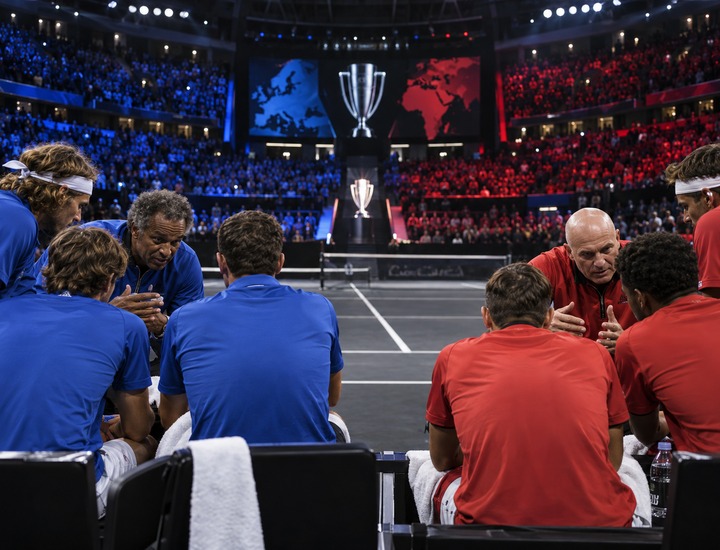
The Laver Cup features 6 of the best men’s tennis players representing Team Europe against 6 counterparts from Team World across 3 days of competition. Held annually 2 weeks after the US Open, the tournament rotates between European and global host cities, using 1 competition hard court inside an indoor arena or a stadium equipped with a retractable roof.
As an officially certified ATP Tour event, all individual match results count toward official player records. Competitions are overseen by ATP umpires and adhere strictly to ATP rules, regulations, and on-court protocols.
Leadership and player selection
Legends guide both squads from the bench. Yannick Noah captains Team Europe alongside vice captain Tim Henman, while Andre Agassi serves as captain of Team World with Patrick Rafter as vice captain. The captains handle player selection, set the daily lineups, direct match preparation, and provide on-court coaching to help steer their team toward the 13 points required for victory.
Qualification is determined largely by the ATP singles rankings on the Monday following Roland-Garros. The top 3 ranked players from each region receive automatic invitations. If any decline, invitations pass down to the next highest-ranked players until 3 positions are filled. The remaining 3 spots on each 6-man roster are captain’s picks, which can be announced at any stage before the US Open begins. If a captain names a player before Roland-Garros, they commit to using a pick should that player miss automatic qualification. Squads can also name up to 2 alternates.
Points and match structure
Matches are contested across 5 sessions from Friday to Sunday. Both singles and doubles rubbers are best-of-three sets with advantage scoring, utilizing a 10-point match tiebreaker if players split the first two sets. Every participant must contest at least 1 singles match over the opening 2 days, and no competitor can play singles more than twice throughout the event. In addition, at least 4 of the 6 players must feature in doubles, with no pairing allowed to play together twice unless required in a final tiebreaker.
| Day | Points per match win | Lineup submission process |
|---|---|---|
| Friday | 1 | Submitted via blind draw on Wednesday, announced on Thursday |
| Saturday | 2 | First team submits blind within 30 minutes after night session; second team responds within 30 minutes |
| Sunday | 3 | Order reversed from Saturday; first team submits blind, opponent responds within 30 minutes |
With 24 total points available, the first team to accumulate 13 points secures the title. If the score finishes level at 12:12 after all 12 scheduled matches, an overtime doubles decider is played as a single regular set featuring advantage scoring and a tiebreak. Should only 1 match be needed on Sunday to determine the champion, an exhibition fixture takes place following the trophy ceremony.
Compensation and future destinations
Player compensation consists of two components. Every competitor earns an appearance fee determined by their ATP singles ranking on the Monday following Roland-Garros. Additionally, each member of the 6-player winning roster receives $250,000 USD, while members of the losing team receive no prize money.
Future editions are already locked in. The 9th edition will take place from September 25-27, 2026, at The O2 in London. The event will then head to California for its 10th edition, running from September 24-26, 2027, at Intuit Dome in Inglewood, Los Angeles.