




Key Takeaways
- ProKennex has brought its Kinetic System, used in tennis for 30 years, into padel, using internal microspheres to limit vibrations from ball impacts.
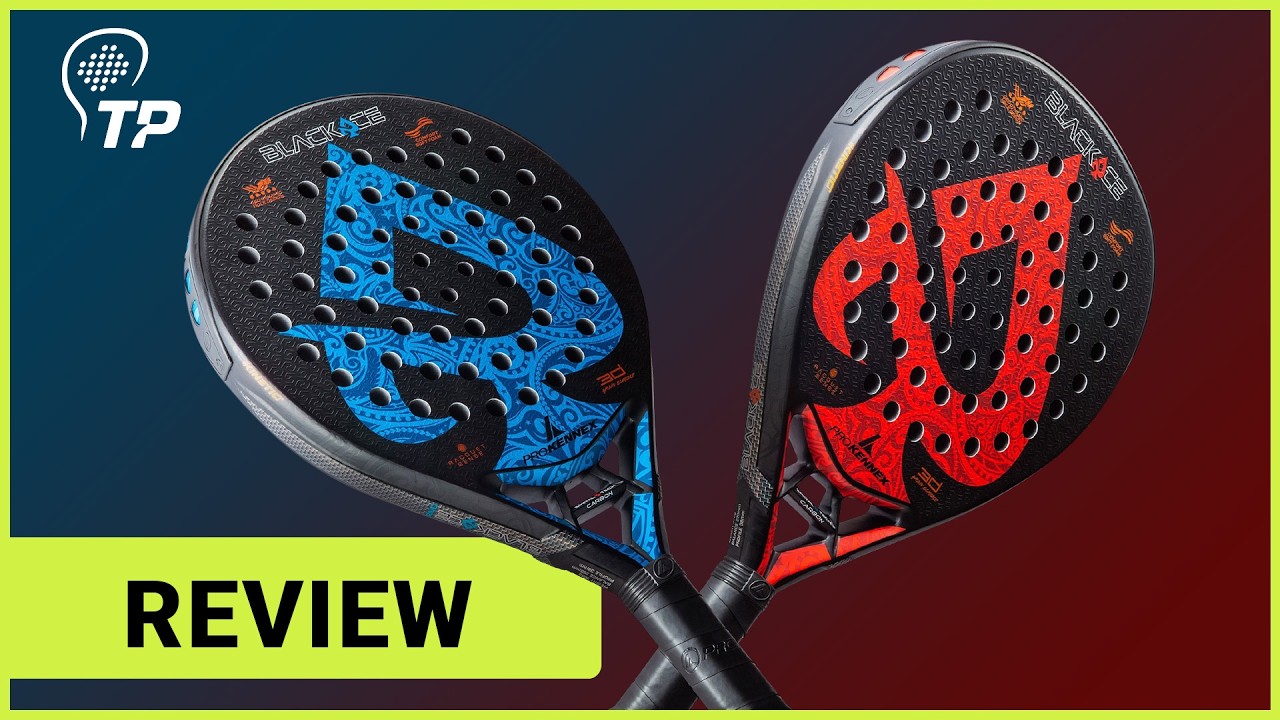
- After assessing both rackets, Total Padel’s Aladdin described the 370 g, diamond-shaped Black Ace as a comfortable option for attacking left-side players.
- Aladdin identified the round Black Ace RND, with its lower balance and expanded sweet spot, as particularly suitable for patient right-side players affected by arm pain.
Tennis-derived Kinetic technology enters padel
The noise coming from the ProKennex Black Ace rackets may initially catch players off guard. During his review of the new models, Total Padel’s Aladdin addressed the likely confusion as soon as he examined the frame: “You might think the rackets are broken, guys, but it’s not the case.”
That distinctive sound from inside the frame is deliberate and stems from technology with a lengthy history in racket sports. “What you’re hearing is the kinetic system of ProKennex, a technology introduced by the brand in tennis since more than 30 years, and now we have it in Padel,” Aladdin said. He then explained that specially engineered internal parts create the noise: “So guys, this sound is caused by microspheres built into the frame of the racket. They help eliminate the vibrations that can be felt when the racket impacts the ball.”
How the Black Ace differs from the Black Ace RND
Built with different head shapes and weight specifications, the 2 ProKennex models target contrasting types of player and playing style.
When describing the diamond-shaped model’s construction, Aladdin noted that “the Black Ace is diamond shaped racket weighting 370 g with a soft Eva core and a carbon surface.” The alternative model, meanwhile, differs: “the Black Ace RND is round-shaped, weight 365 g, and also features a soft Eva core and a carbon surface.”
Testing the classic Black Ace on court
Court testing exposed distinct characteristics from the 2 rackets in both attacking and defensive situations. Aladdin began his assessment with the standard Black Ace, saying, “I can tell you that it’s made for attacking style players.”
Although the classic Black Ace remained stable when absorbing pace, it was more demanding from deep in the court. “In defense, I felt it was quite hard to handle, but still very stable, especially when blocking fast shots,” Aladdin said. He also found that adapting during transitional phases took some time: “Bajadas and flat shots were decent, but my chiquitas were too high most of the time. I think I just need to get used to the touch and the ball output of this racket.”
The diamond-shaped racket showed its strongest qualities once play advanced to the net. “In attack, here you go: Sharp volleys, aggressive viboras, and easy finishing,” Aladdin noted. “The limited sweet spot didn’t prevent me from putting pressure on my opponent. And it all came in a very comfortable package.”
Reducing stress on the arm was a consistent theme during the test, with “the combination of the soft evacore and the kinetic system offered a great sensation and excellent comfort.” Aladdin ultimately determined that “it’s a great racket for left side players looking to finish the point right away and also looking for some extra comfort.”
The RND model’s emphasis on control and accuracy
A different balance and court sensation became apparent immediately after the switch to the round racket. Aladdin said, “I tried the RND version and the difference in the speed spot, I felt it right away.”
The racket moved through the air as though it were lighter, but its measured weight exposed a notable detail about how the mass is distributed. “The first thing I noticed was that I felt it lighter in my hand, but when I put both rackets on the scale, the RND was actually heavier,” he said. “So, the balance is truly lower and that gave me much more control than the classic version.”
During difficult exchanges, the more generous sweet spot provided additional forgiveness: “The sweet spot helped me in different game situations. I felt that even if I hit the ball off center, I still had good control. Plus, my chiquitas were much better.”
The round model is better suited to controlled tactical patterns than to producing outright finishing power. “In attack, it didn’t give me the same sensation of aggressiveness, but great precision and stability,” Aladdin said. “It’s built for pure control and patient players who rely on finding the right zones, building the point, and waiting for the right ball to finish. It’s mostly suited for right side players looking for a soft feel racket.”
Aladdin underlined the practical medical advantages of both rackets for players experiencing joint discomfort or other physical strain: “So guys, if you’re suffering from some injuries or some pain in your arm, then you have two options from ProKennex for two different playing style. Left side players can use the classic version. Right side players can use the round shaped version.”