




Key Takeaways
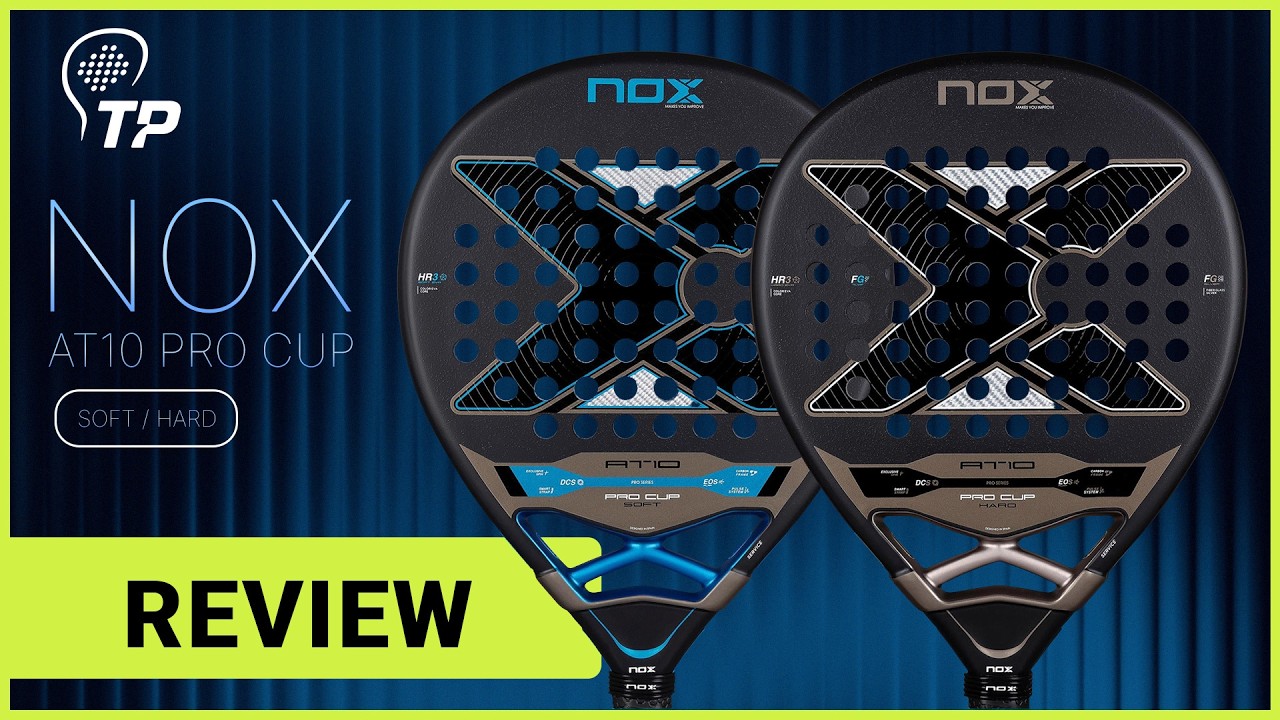
- Inspired by Agustin Tapia’s classic frame, the two Nox AT10 Pro Cup rackets combine a teardrop profile and medium balance with a fiberglass-aluminum face.
- Control and touch defined the Soft model during testing, prompting the reviewer to report that “defense felt so easy and enjoyable.”
- At the net, the Hard model delivered its most impressive performance, with the reviewer noting that “the stiffer core made the ball come off the racket faster.”
How two models inspired by Agustin Tapia compare
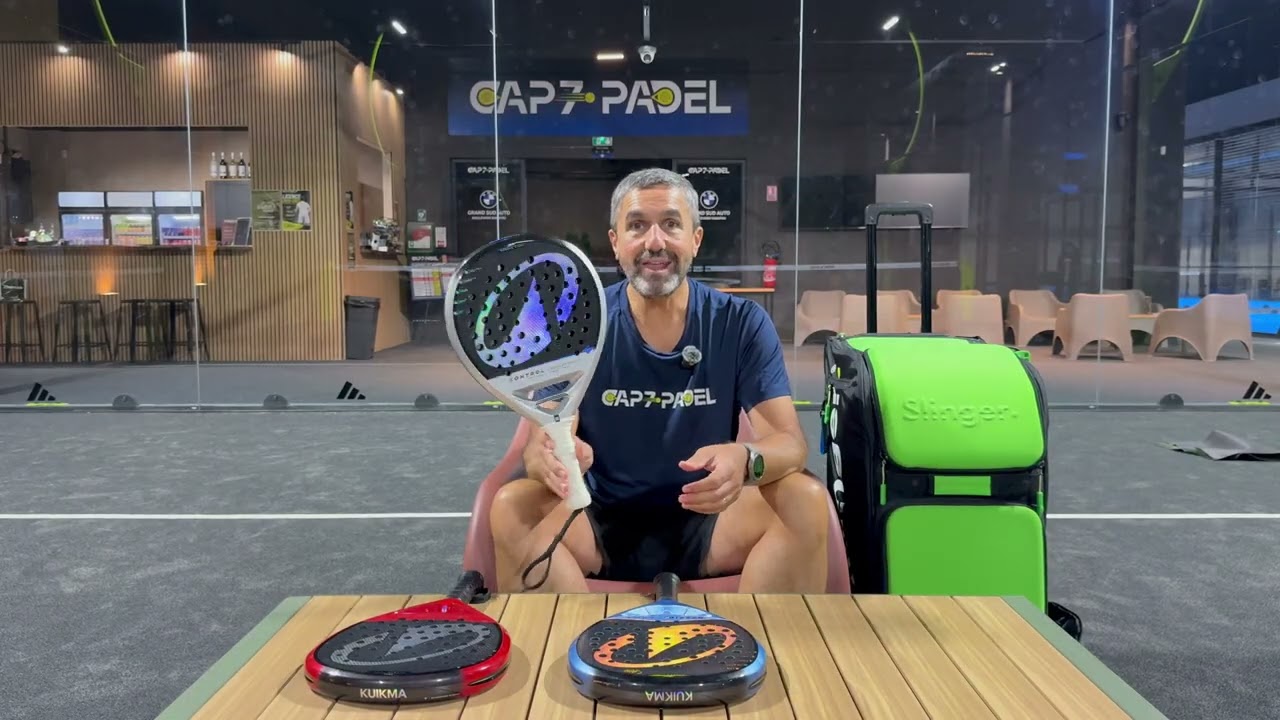
The Nox AT10 Pro Cup Hard and Nox AT10 Pro Cup Soft share several specifications: a teardrop shape, medium balance, a fiberglass-aluminum hitting face, and a manufacturing weight range of 360 to 375 grams. Drawing directly from professional star Agustin Tapia, the two understated padel rackets were examined by equipment specialists across multiple on-court testing sessions.
Core construction provides the key difference between the rackets. While the Soft uses a low-density core focused on comfort, touch, and ball output, the Hard features HR3 hard EVA to deliver a firmer response and greater hitting power.
Soft-core comfort and performance
At 365 grams with an overgrip fitted, the Soft model was the first racket tested. The reviewer’s initial assessment was that “the racket is impressive in terms of control and comfort,” Another finding was that “defense felt so easy and enjoyable.” From the baseline, it handled fast exchanges with dependable stability. As the tester put it, “I was able to hit with a lot of stability, whether blocking fast shots or trying to place the ball softly into the corners of the court,”
The same positive impression continued when moving forward into attacking areas. On this aspect, the tester stressed that “the racket was so easy to move through the air, and I could hit all my shots with remarkable precision.” Its moderate weight made the racket quick to maneuver, allowing effective overhead shots without requiring undue effort. The playtester added that “I was able to generate power through the fast racket speed,” For players who prefer to construct points patiently, the final assessment was: “The racket is definitely not stiff, and I highly recommend it to anyone looking for a great mix of attack, defense, and above all, comfort with a more patient defensive style.”
Hard-model power and aggressive play at the net
With an overgrip attached, the Hard model came in at 372 grams. Any early worries that it might feel excessively rigid soon disappeared, as the reviewer acknowledged that “I expected it to be too stiff, but it was not the case.” Its denser materials provided additional resistance, while defensive blocks remained reliable against powerful incoming shots.
The firmer construction showed its main advantages when the tester moved into attack. According to the review, “I focused more on getting to the net quickly. And that’s where you really see the potential of this racket,” The tester also stated: “I was able to put more pressure on my volleys, partly because you naturally put more effort into handling the racket, and the stiffer core made the ball come off the racket faster.”
Overhead finishing proved to be another major strength, with the reviewer finding that “the overheads were great as well, especially the flat smashes.” The Hard was characterized as “a super complete racket with a slight power orientation,” and identified as a compelling option for aggressive left-side players, although it remained suitable for use throughout the court.