
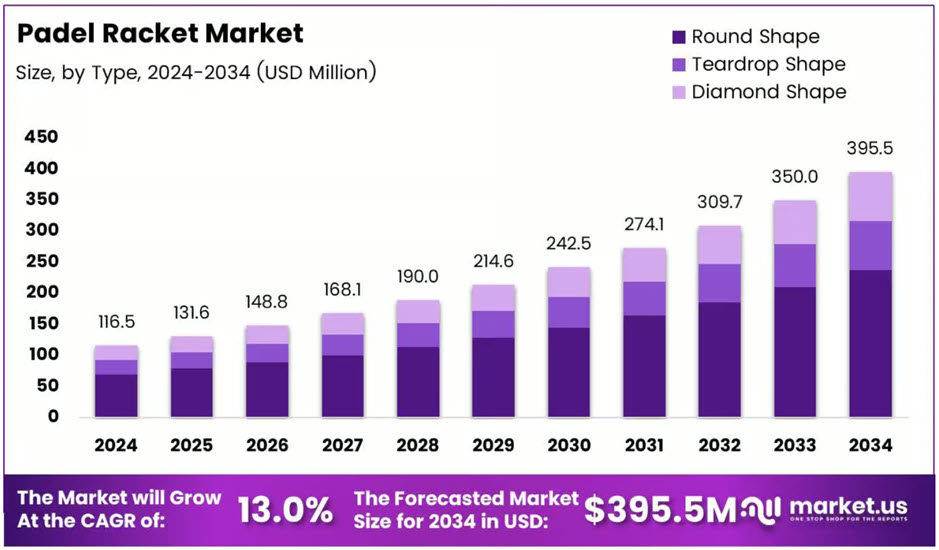
Market.us reports that Padel’s popularity is rising all around the world. Its expansion, which is especially strong in Europe, is driving up demand for specialized gear, with padel rackets setting the standard. The market is expected to reach USD 395.5 million by 2034, having grown from USD 116.5 million in 2024 at a compound annual growth rate of 13%. The popularity of padel among players, both casual and competitive, is reflected in this expansion.
Product development is shaped by creativity and personalization.
In response to the sport’s expansion, manufacturers are making investments in new product development. These days, rackets come in a range of materials, weights, and shapes to accommodate various playing styles. Particularly among amateur players looking for comfort and control, customization features like grip size and racket balance are growing in popularity. In a crowded market, these innovations are assisting brands in standing out from the competition.
Investing in infrastructure increases accessibility.
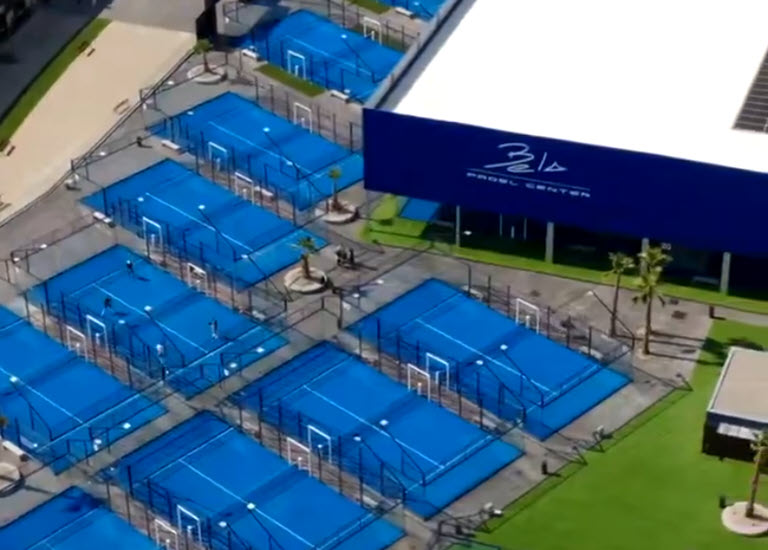
Padel’s popularity has led to large infrastructure investments. Courts are being constructed by both public and private organizations to satisfy the increasing demand. For instance, Ireland is spending €5 million to build 100 new courts by the end of the year to accommodate 60,000 players. Since 2019, the number of courts in the UK has increased from 50 to 350, and the number of participants has increased from 6,000 to 129,000. These initiatives are increasing the accessibility of padel and boosting sales of equipment.
Spending by consumers shows a dedication to excellence.
More and more padel players are prepared to spend money on top-notch equipment. Some aficionados in the UK spend more than £100 a week on accessories, court costs, and rackets. Given that high-end rackets can cost up to £300, there is a sizable market for goods that improve performance. This pattern highlights how the sport has changed from a lighthearted hobby to a serious athletic endeavor.
The type segment is dominated by round-shaped rackets.
Round rackets, which are popular because to their easy use and forgiving sweet spot, accounted for 45.8% of the market in 2024. Because they provide control and consistency, these rackets are perfect for novice and intermediate players. Advanced players who prioritize maximal power are the focus of diamond-shaped rackets, while those looking for a balance between power and precision are drawn to teardrop-shaped versions. Padel’s widespread appeal among recreational players is reflected in its dominance of the round shape.
Innovation in materials is led by carbon fiber.
With 39.6% of the market in 2024, carbon fiber became the most popular material. It is the go-to option for serious players due to its power transfer qualities and strength-to-weight ratio. Fiberglass is still a common substitute for consumers on a tight budget, whereas foam and ethylene vinyl acetate materials improve comfort and absorb shock. Composite blends are still being investigated by manufacturers in an effort to increase durability and performance.
Market volume is driven by the amateur segment.
Amateur players represented 59.2% of the market in 2024, highlighting padel’s growth as a recreational sport. Mid-range rackets that strike a balance between price and performance are preferred by this market. The amateur base propels volume sales and market expansion, while professional players require state-of-the-art equipment. As padel spreads to new regions, this segment is expected to remain the primary revenue source.
International growth and developing markets
Padel’s reach is extending beyond Europe into Asia, the Middle East, and Latin America. The sport is gaining popularity in emerging regions, which opens up new business prospects for producers. The rise of digital platforms and online retail is also contributing to growth, with 35% of racket purchases now made online. These trends point to a dynamic and evolving market landscape.
Adoption and market awareness issues
Despite strong growth, padel faces hurdles in non-traditional markets. Limited awareness and competition from established racket sports like tennis can slow adoption. Without targeted promotion and education, some regions may remain untapped. Addressing these challenges will be key to sustaining long-term growth.
The global padel racket market is on a strong upward trajectory, driven by rising participation, product innovation, and infrastructure investment. With Europe leading the charge and emerging markets gaining momentum, the industry is poised for continued expansion. As manufacturers refine their offerings and players invest in quality gear, padel is establishing itself as a major force in the global sports landscape.