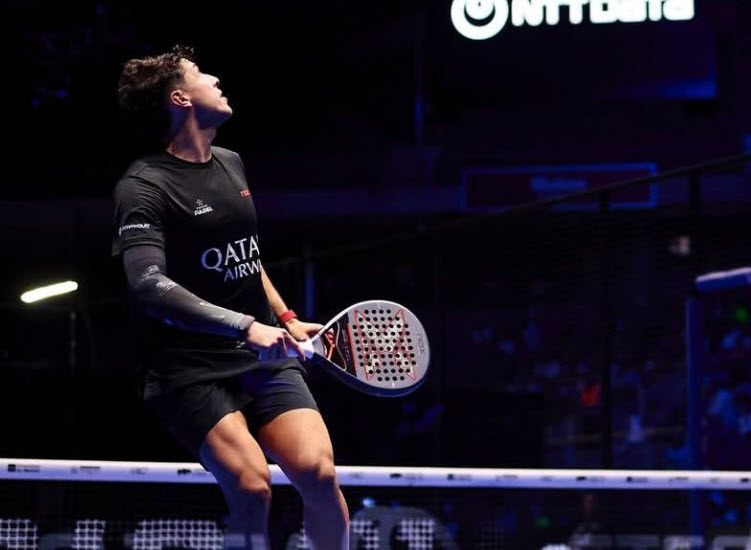


In padel, missing high backhand volleys is frequently the result of bad timing and positioning. Players frequently rush into these shots, undervaluing control and consistency. For a high backhand volley to make contact with the ball at the ideal height, timing must be exact. The racket face either opens excessively or sends the ball downward if you swing too early or too late. When that is combined with unbalanced footwork, the outcome is either a poor return or a total miss.
The secret is to get your posture ready long before the ball gets to you. Maintain a slightly open stance, transfer your weight to your dominant leg, and focus intently on the ball. This provides you the best chance of making clean contact and helps you stay balanced.
The function of racket angle and grip
Grasping the racket too tightly is a common mistake. Your shot suffers from that tension, which robs you of control and kills finesse. For high backhand volleys, a relaxed grip that is nonetheless sufficiently firm to keep the racket stable during impact is optimal. In order to improve reach on the high bounce and wrist flexibility, players frequently employ a continental grip.
The tilt of the racket is equally crucial. The ball plunges into the goal if it’s too flat. If it’s too open, the ball will sail. You need to find the sweet spot by adjusting the racket face slightly upward but not exaggerated—this keeps the volley crisp and targeted.
Strategic awareness and shot anticipation
Many missed backhand volleys happen not because of technique, but because players aren’t anticipating the shot early enough. In padel, where the ball can rebound off walls, reading the opponent’s body language and racket direction gives you a vital advantage. Anticipation helps you prepare your movement early, ensuring you’re in the right spot with time to execute a solid backhand volley.
Also, understand when a high backhand volley is your best option. If the ball is dropping fast or has little pace, sometimes a reset or lob is more effective. Knowing your choices improves your odds of making cleaner shots under pressure.
Maintaining mental stability under duress
Finally, it’s about how you react under pressure. High backhand volleys usually come in quick-fire exchanges. If you tighten up mentally, your body follows. Breathing calmly, maintaining soft hands, and trusting your reflexes are crucial. Build that confidence through practice and repetition so when the heat is on, your instincts take over.