



Key Takeaways
- Jamie Murray responded to Carlos Alcaraz considering a one-to-two month break to manage a wrist issue.
- Murray warned the tennis calendar is “relentless,” stretching almost year-round from December to November.
- He highlighted the intense match load at Grand Slams: “seven matches in 14 days.” Murray said selective scheduling is part of preserving longevity and player health. Murray noted the tour must balance the needs of top stars with opportunities for around 100 players.
Jamie Murray weighs in on Alcaraz’s possible break
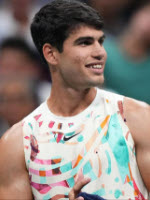
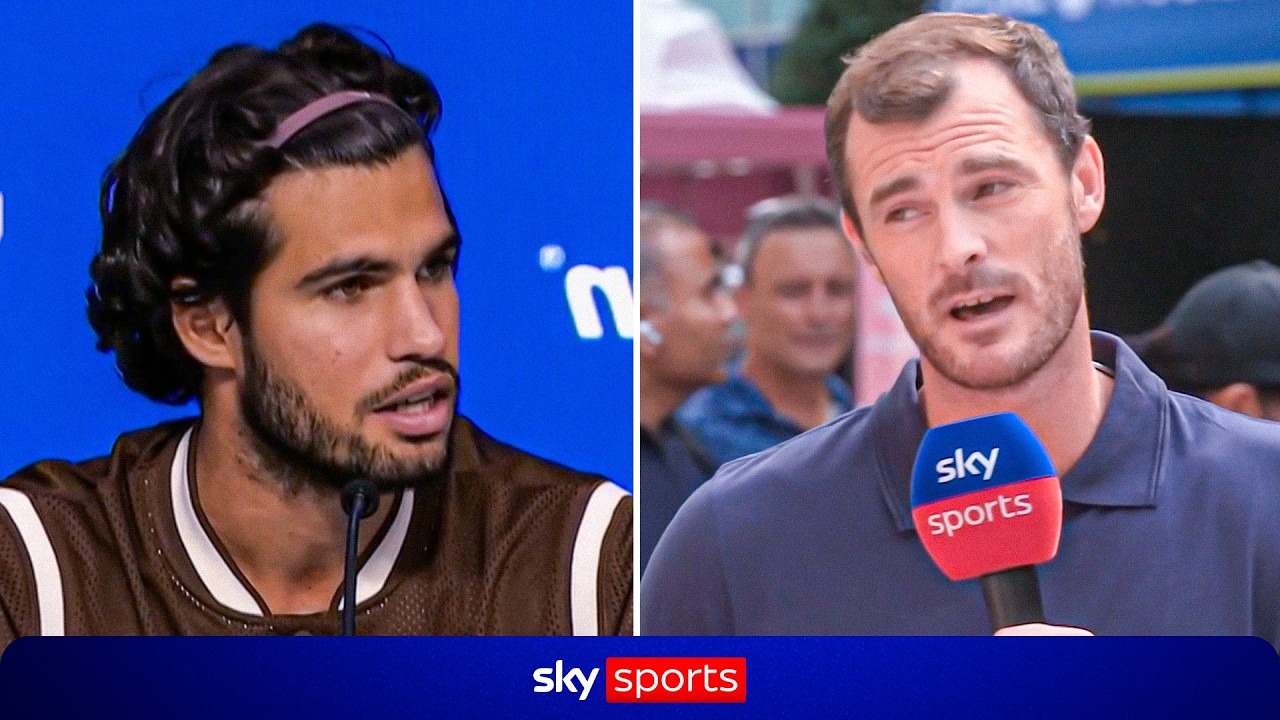
Jamie Murray has reacted to Carlos Alcaraz’s suggestion that he might take a month or two away from the tour to manage a wrist issue, saying the move would be understandable given the modern schedule.
“I’m going to be interested to see which tournaments he decides to sacrifice,” Murray said, noting the tough choices top players face when protecting their bodies.
Relentless calendar and player wellbeing
Murray argued the tour’s schedule leaves little room for extended downtime. “The tour is relentless,” he said, explaining how the season runs almost year-round: “We run from the end of December right through until November,” which squeezes the offseason and preseason into a few weeks.
He pointed out the unique match load for elite players at slams, adding that the demands of tournament competition differ markedly from practice. “Every time that center or Alcarz come into a grand slam, they have to play seven matches in 14 days,” Murray said, arguing that most players do not face that intensity.
Longevity, past examples and tour implications
Murray referenced older players who managed their schedules and suggested younger stars are watching that example. “They’re trying to stay healthy and obviously a very big focus for Carlos,” he said.
Reflecting on criticism that can follow such breaks, Murray noted earlier reactions to players taking time off. “He actually received a bit of criticism, didn’t he, a few years ago for going to Ither and having a bit of a break after Roller Garas before the grass season,” he recalled, saying the time away did not appear to harm the player’s level.
On the broader effect of top players skipping events, Murray accepted fans and organisers would notice. “So, I’m going to be interested to see which tournaments he decides to sacrifice um in order to take those long breaks cuz whichever tournaments that are, I’m not going to be happy,” he said, acknowledging the difficult balance between player health and tournament expectations.
Comparisons and the future of scheduling
Murray suggested the trend of selective scheduling is not new, citing examples from the women’s game and past champions. “Serena always used to do that, right? Serena never played as full,” he observed, and later added that elite players often play more matches per week than others.
He finished by highlighting the tour’s challenge in serving a wide field of professionals while the top names consider longevity strategies. “They’re catering to 100 players,” he said, noting the conflict between protecting a few stars and maintaining opportunities for the wider tour.
What to watch next
- Which events Alcaraz may skip if he chooses a one-to-two month break.
- How tournament organisers respond to potential absences from top players.
- Whether the trend of selective scheduling expands among younger stars aiming for longer careers.
https://www.youtube.com/watch?v=HA0ei3qSGpA
ATP U.S. Open - Carlos Alcaraz's projected path

Alcaraz at the U.S. Open, ranking, and results in 2026



Now ranked no.3, Alcaraz has managed to achieve a 24-3 win-loss record in 2026. Alcaraz is now competing at the U.S. Open where he overcame the world no.99 Roman Safiullin 6-4 6-4 6-4 and the world no.72 Jaime Faria 4-6 6-0 6-3 6-2.
Carlos Alcaraz will come up against the world no.113 Yibing Wu in the 3rd round. Their actual head to head record is 1-0 for Alcaraz.
Carlos clinched 2 titles in 2026 at the Australian Open and Doha.
The Spaniard won 27 titles in his career: 10 on hard courts, 11 on clay courts, 2 on indoor courts and 4 on grass courts. (See the list of his titles)